Biology Together · Skim version
The Listening Walk
Read the full lesson → Skim the whole course →
The guiding idea
How many sounds are there in a quiet backyard? Two still minutes and a sound map help a child find out.
You and your child sit still outside for two minutes and draw a sound map of everything you hear: near or far, loud or soft, high or low, made by something living or not.
-
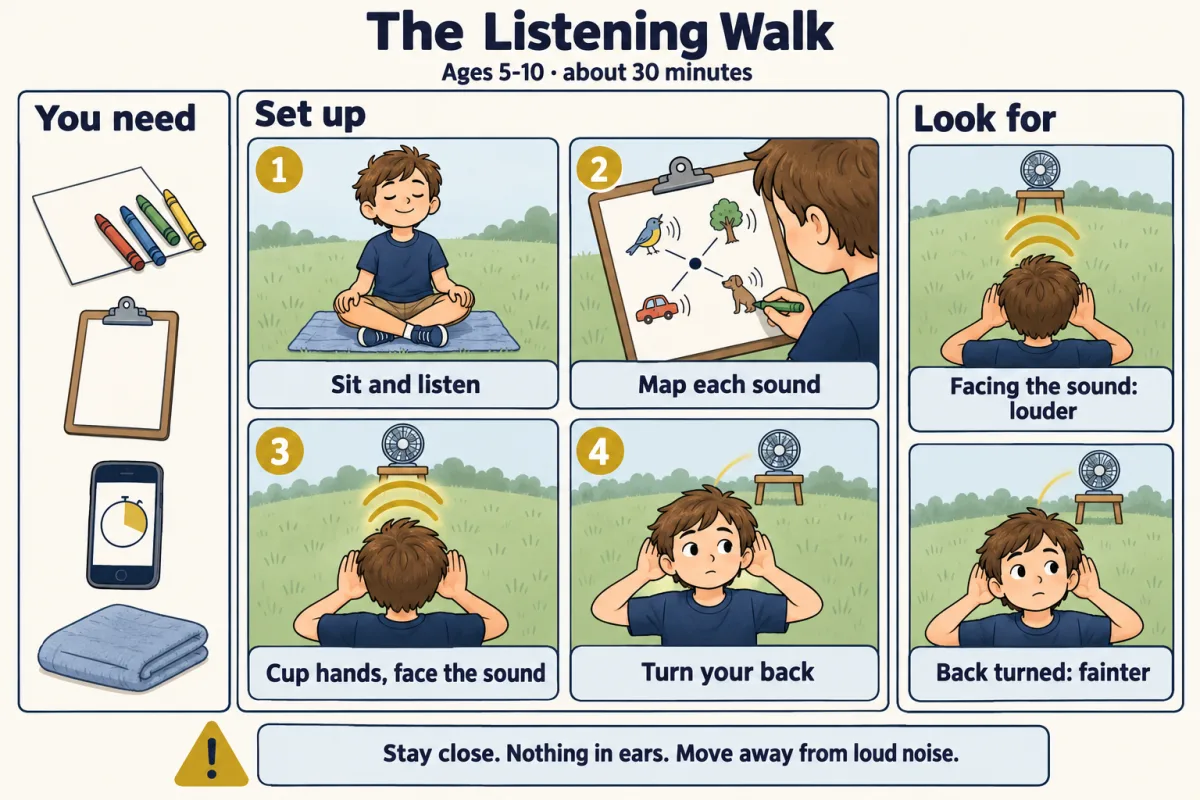
At a glance: print this card or keep it open while you work. The full steps and safety notes are below. AI-generated illustration -
The big idea
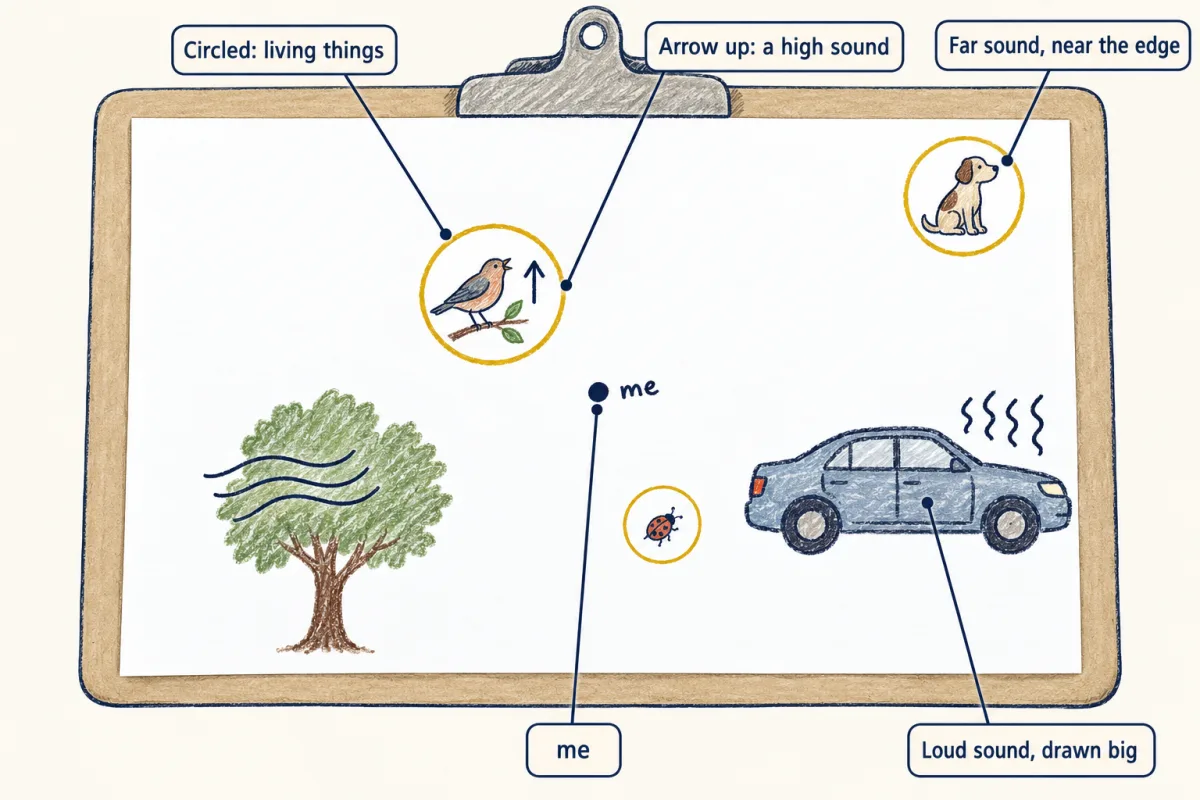
An example sound map. Your child draws each sound in the direction it came from, near sounds close to the dot and far sounds near the edge, loud ones big and soft ones small. Circle the sounds made by living things. AI-generated illustration -
What to do
-
Questions to ask while you do it
-
What children often think
-
Why it works
-
Easier and harder
-
If it doesn’t go as planned
-
Observation sheet
Where this lesson fits
After thisStudy next
- Beak BuffetThis course · Lesson 16
Your child sees again how a body part's shape suits a job, like big ears for gathering sound.
- Fur, Feathers and ScalesThis course · Lesson 15
Another body covering or part that helps an animal live where it lives, found by feeling the real thing.
Suggested by an AI model from the lessons themselves, then checked. How we use AI