Biology Together · Skim version
Leaf Detectives
Read the full lesson → Skim the whole course →
The guiding idea
How can you tell an oak from a maple without a label? A pile of fallen leaves and a few yes-or-no questions can do it.
You and your child collect fallen leaves, sort them one feature at a time, and make crayon rubbings.
-
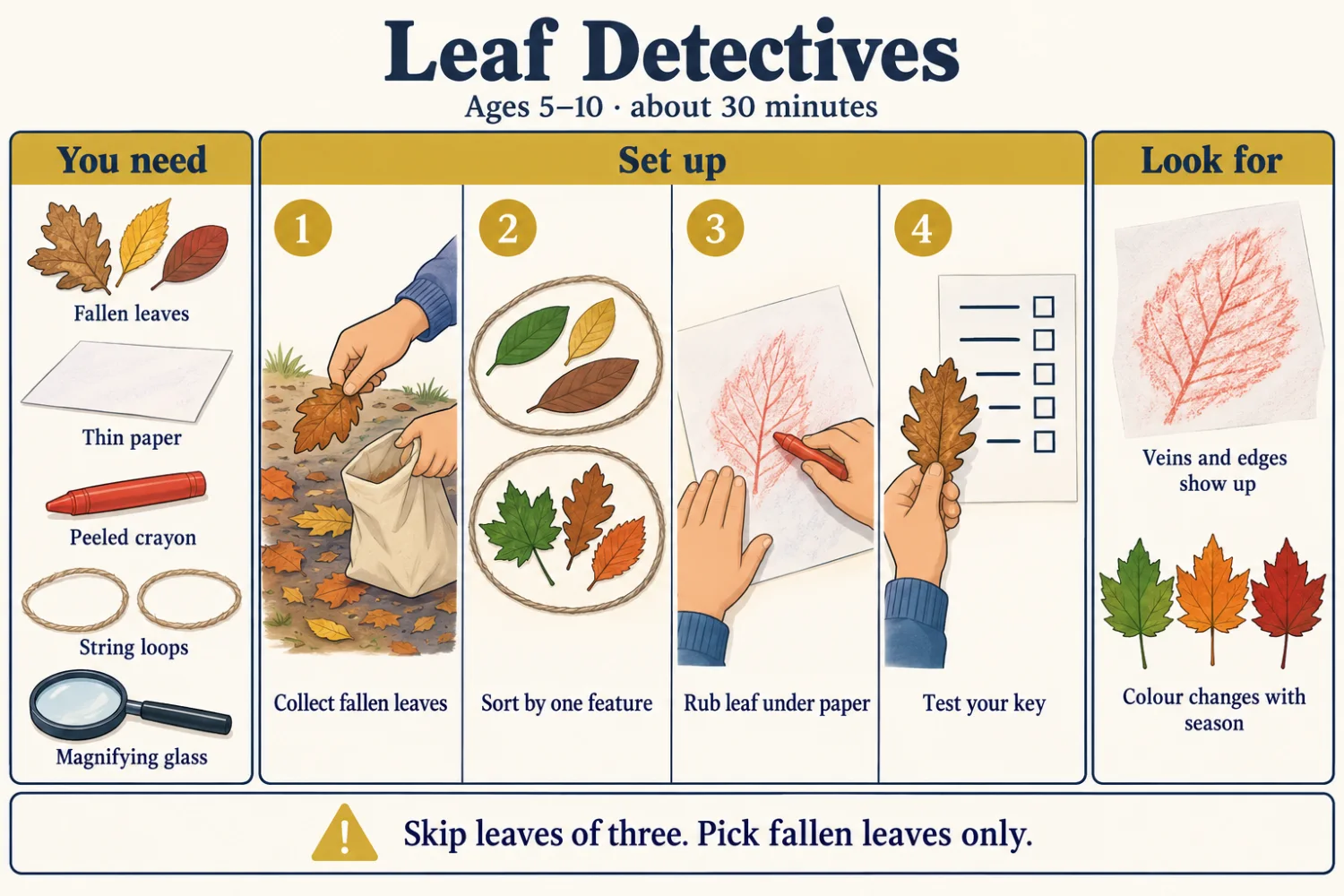
At a glance: print this card or keep it open while you work. The full steps and safety notes are below. AI-generated illustration -
The big idea
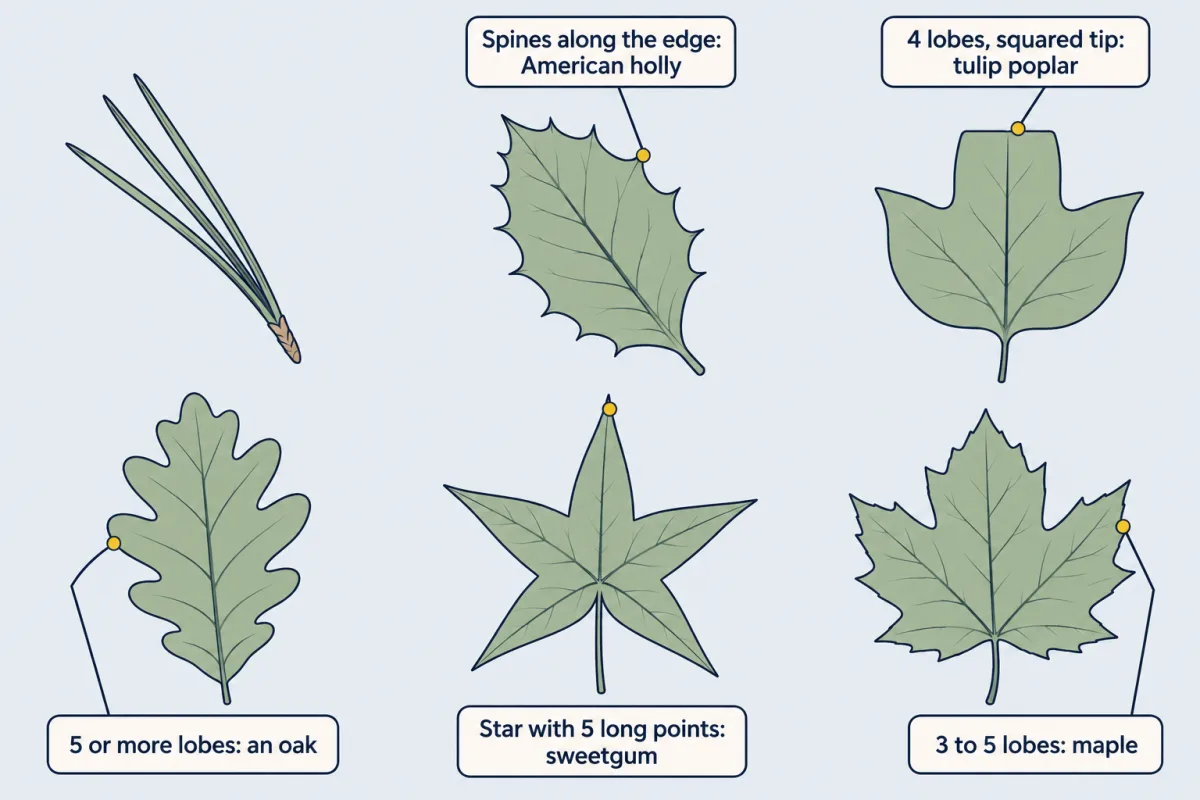
The six kinds of leaf the key on this page sorts: pine needles, American holly, tulip poplar, oak, sweetgum and red maple. They are all drawn in one colour because shape, not colour, tells them apart. AI-generated illustration -
What to do
-
Questions to ask while you do it
-
What children often think
-
Why it works
-
Easier and harder
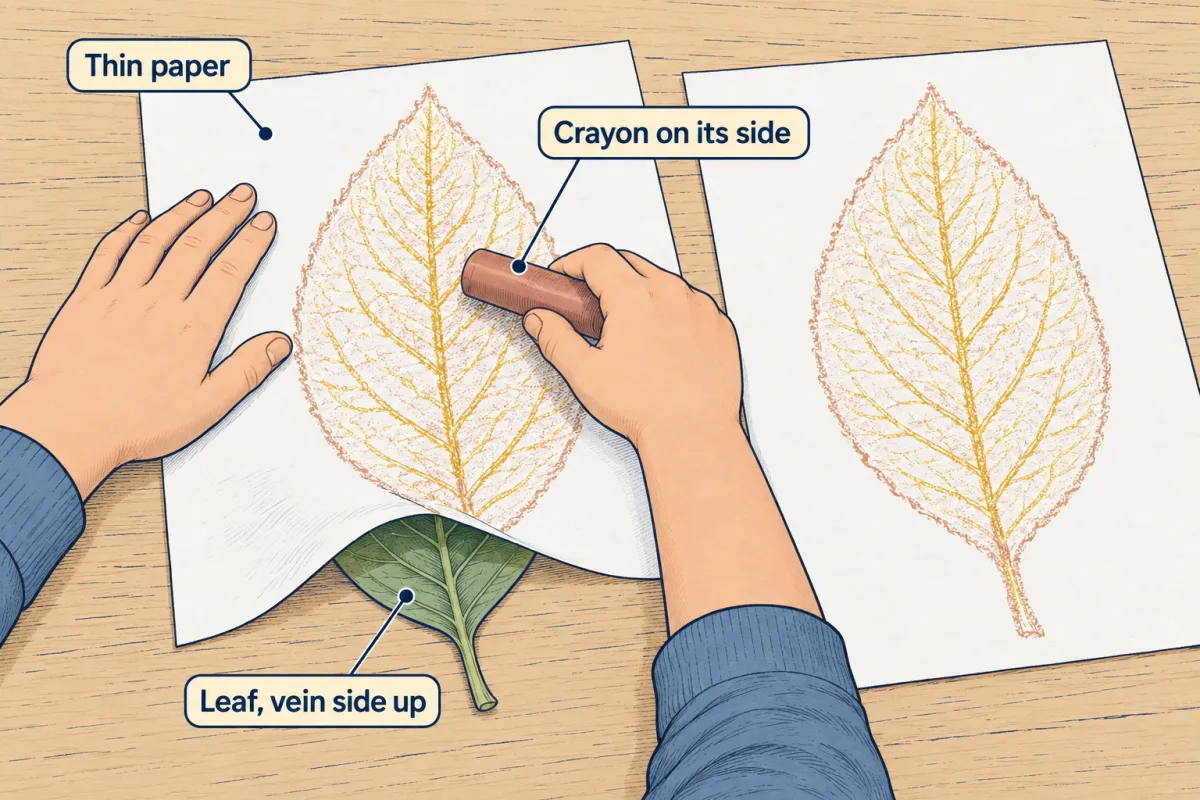
A leaf rubbing. Put a leaf vein side up under thin paper and rub the side of a peeled crayon over it. The veins and edges show up. AI-generated illustration -
If it doesn’t go as planned
-
Observation sheet
Where this lesson fits
Before thisReview first
- Plant Parts We EatThis course · Lesson 8
Your child has already looked closely at plant parts, so they know a leaf is one part of a plant.
After thisStudy next
- Hidden Leaf ColorsThis course · Lesson 27
It uses the idea that leaf colour changes with the season to show where fall colours come from.
- Adopt a TreeThis course · Lesson 25
Your child can use leaf features to name a tree, then watch that tree through the year.
Suggested by an AI model from the lessons themselves, then checked. How we use AI