Biology Together · Skim version
Fur, Feathers and Scales
Read the full lesson → Skim the whole course →
The guiding idea
Why does a bird have feathers and a fish have scales? Feeling the real thing helps a child find out.
A touch-and-compare table of real animal coverings: craft feathers, fur, fish scales and shells.
-
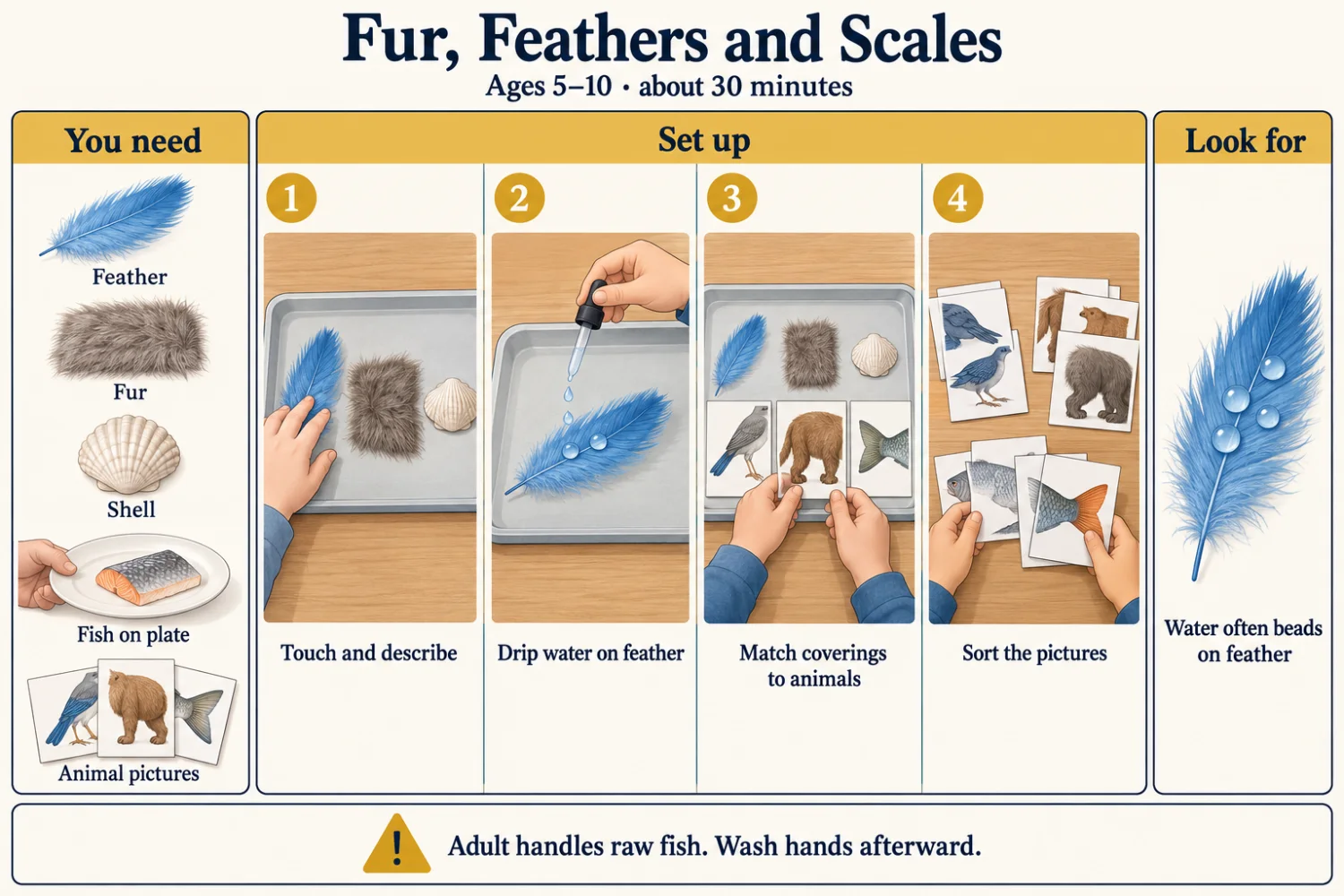
At a glance: print this card or keep it open while you work. The full steps and safety notes are below. AI-generated illustration -
The big idea
-
What to do
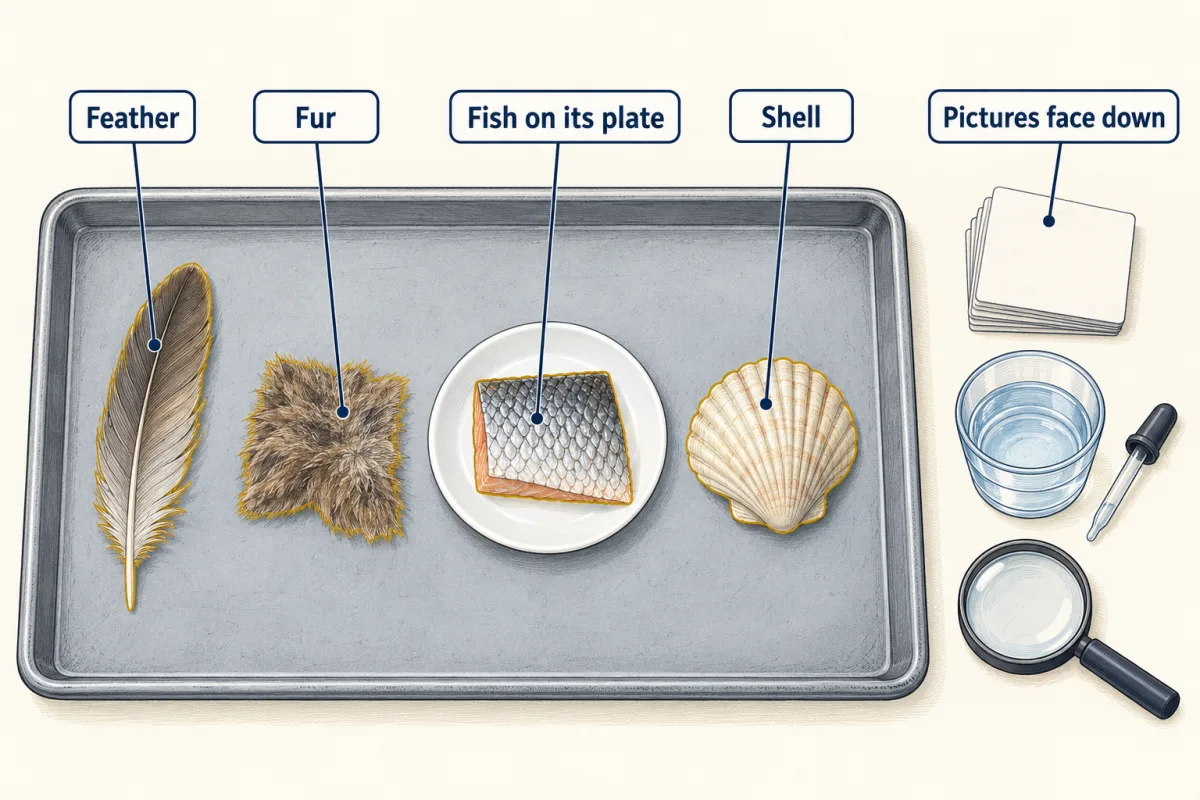
The tray before your child touches anything: a feather, the fur, the fish on its plate and a shell, a hand's width apart, with the pictures face down beside it. The fish is optional. AI-generated illustration -
Questions to ask while you do it
-
What children often think
-
Why it works
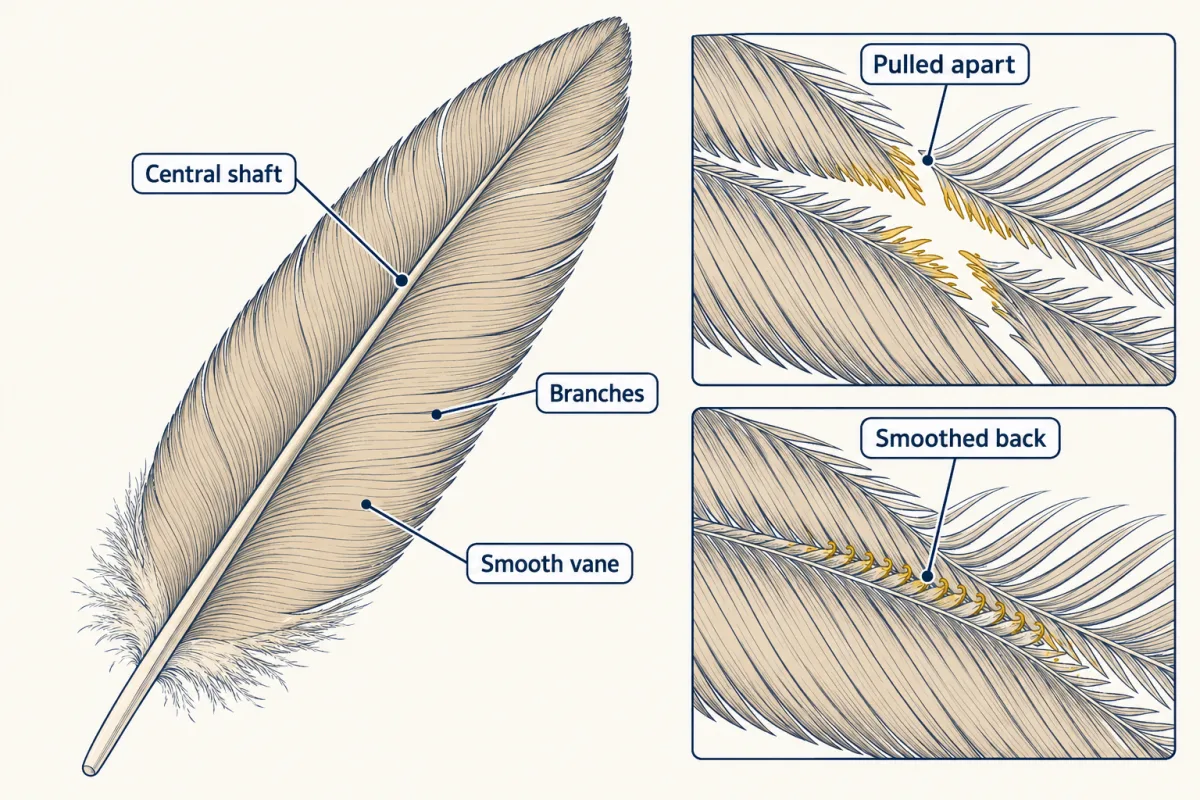
Pull a feather's edge apart, then smooth it back with your fingers, and the parts hook together again. Craft feathers vary, so yours may behave a little differently. AI-generated illustration -
Easier and harder
-
If it doesn’t go as planned
-
Observation sheet
Where this lesson fits
After thisStudy next
- The Camouflage HuntThis course · Lesson 18
Animal coverings like fur and feathers come in colours that help an animal hide, which this game tests.
- The Blubber GloveThis course · Lesson 17
It looks at another body covering, a fat layer, and how it keeps an animal warm in cold water.
Suggested by an AI model from the lessons themselves, then checked. How we use AI