Biology Together · Skim version
Who Eats Whom?
Read the full lesson → Skim the whole course →
The guiding idea
Why does a hawk need grass? Picture cards and a ball of yarn show how the food in a meadow and in the Bay connects.
You and your child make picture cards for a Virginia meadow food chain and a Chesapeake Bay food chain, line them up with arrows, then join them into a web with a ball of yarn.
-
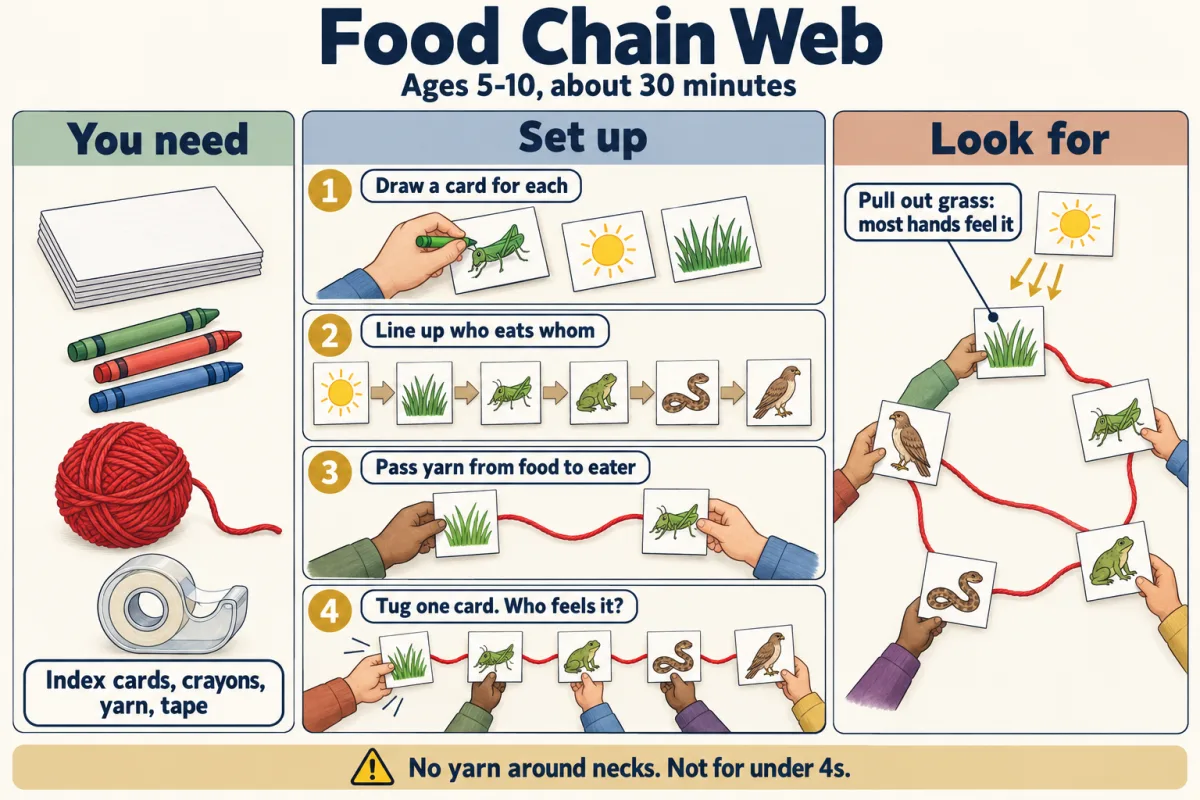
At a glance: print this card or keep it open while you work. The full steps and safety notes are below. AI-generated illustration -
The big idea
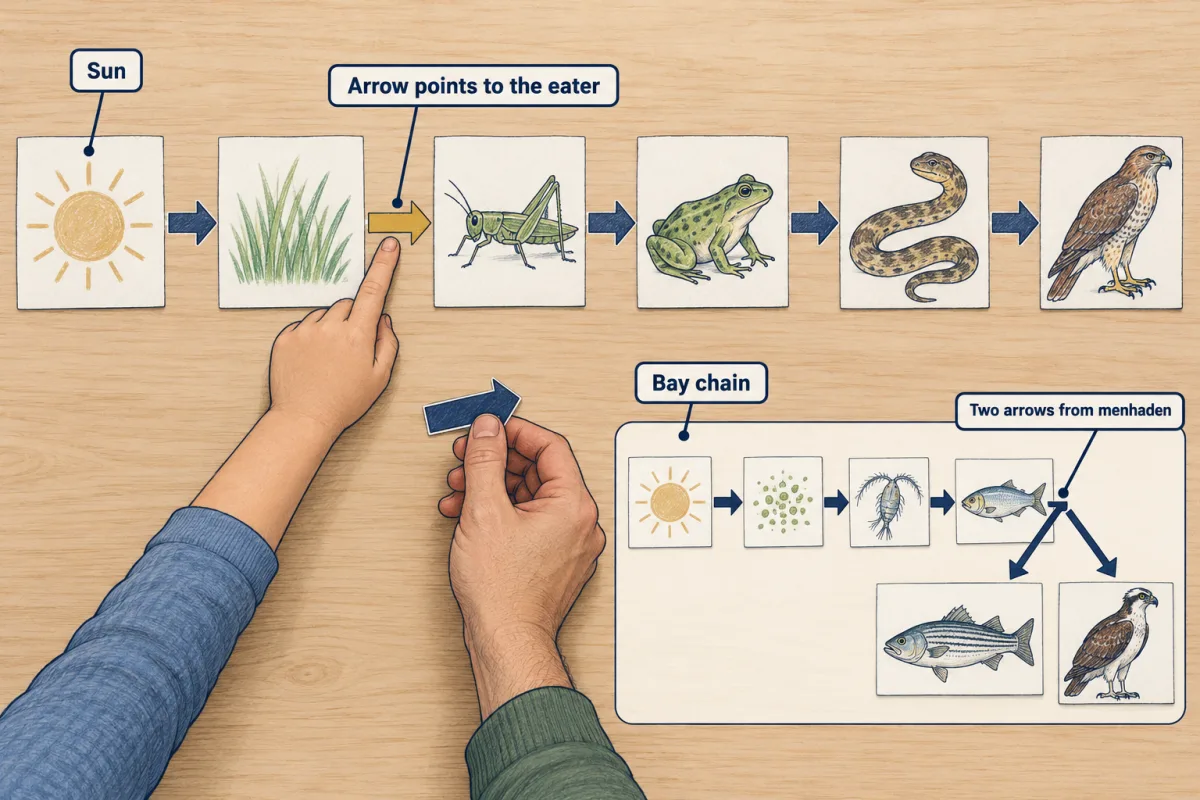
Each arrow shows where the energy goes. The first arrow carries sunlight to the grass, which makes its own food. After that, each arrow points to the one doing the eating. The land chain runs sun, grass, grasshopper, frog, snake, hawk, and the Bay chain forks after the menhaden. AI-generated illustration -
What to do
-
Questions to ask while you do it
-
What children often think
-
Why it works
-
Easier and harder
-
If it doesn’t go as planned
-
Observation sheet
Where this lesson fits
Before thisReview first
- What Do Plants Need?This course · Lesson 7
Your child needs to know plants use sunlight to make their own food, which is why every chain starts with the sun.
After thisStudy next
- Rot DetectivesThis course · Lesson 22
It shows decomposers at work, the mushroom and earthworm part of the web, and what happens to dead things.
- Soil ShakeThis course · Lesson 23
It looks at the soil that dead plants and animals break down into, and soil is where the web's leftovers end up.
Elsewhere on the siteFilms, simulations and method films in other courses
- The Leaf Pile That Stops GrowingFilm · Life Science
It shows producers, consumers and decomposers linked in one ecosystem, like the cards and yarn here.
Suggested by an AI model from the lessons themselves, then checked. How we use AI