Biology Together · Skim version
Take a Flower Apart
Read the full lesson → Skim the whole course →
The guiding idea
What is a flower for? Taking one apart, piece by piece, shows a child where seeds begin.
You and your child take a store-bought flower apart, one ring at a time, and tape the pieces on paper.
-
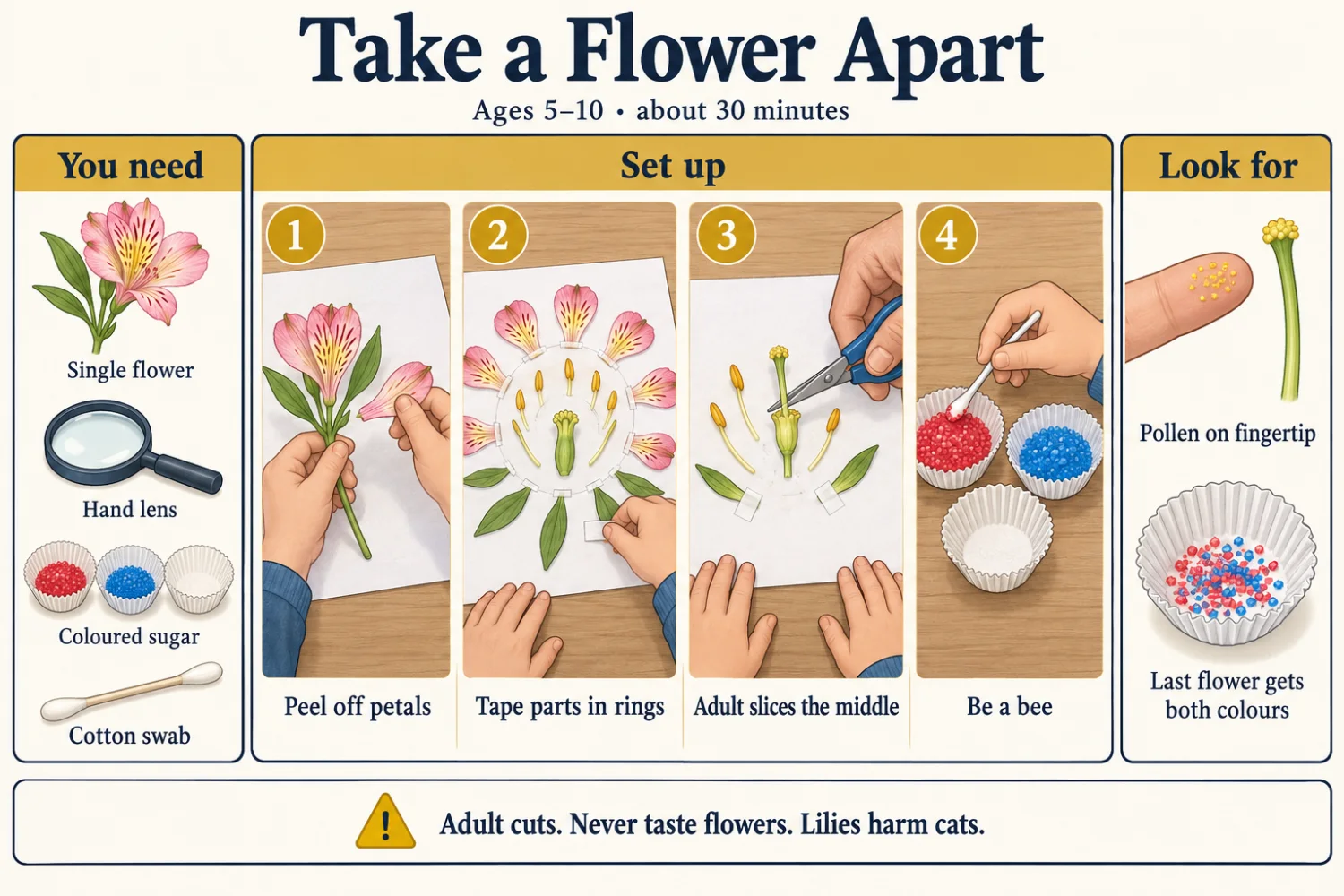
At a glance: print this card or keep it open while you work. The full steps and safety notes are below. AI-generated illustration -
The big idea
-
What to do
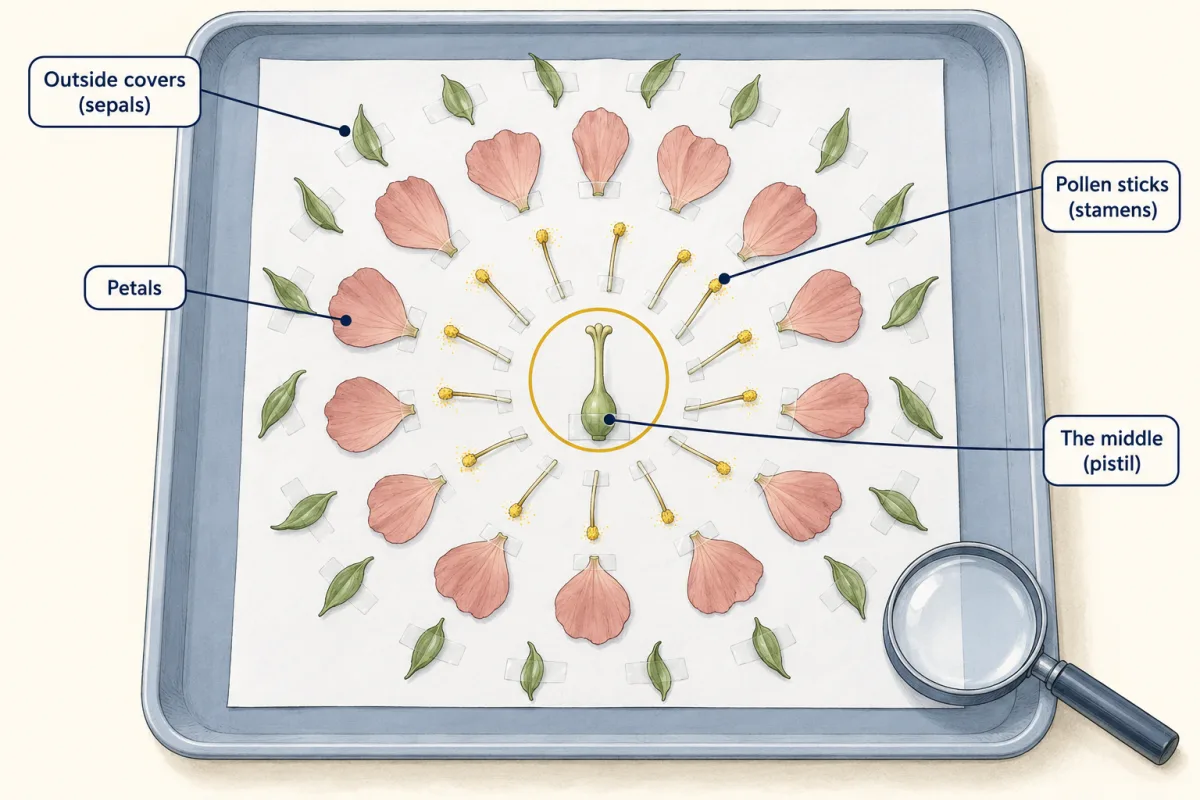
A finished sheet, from the outside in: the outside covers, the petals, the pollen sticks, and the middle part alone in the centre. Your flower will have its own colours and its own number of parts. AI-generated illustration 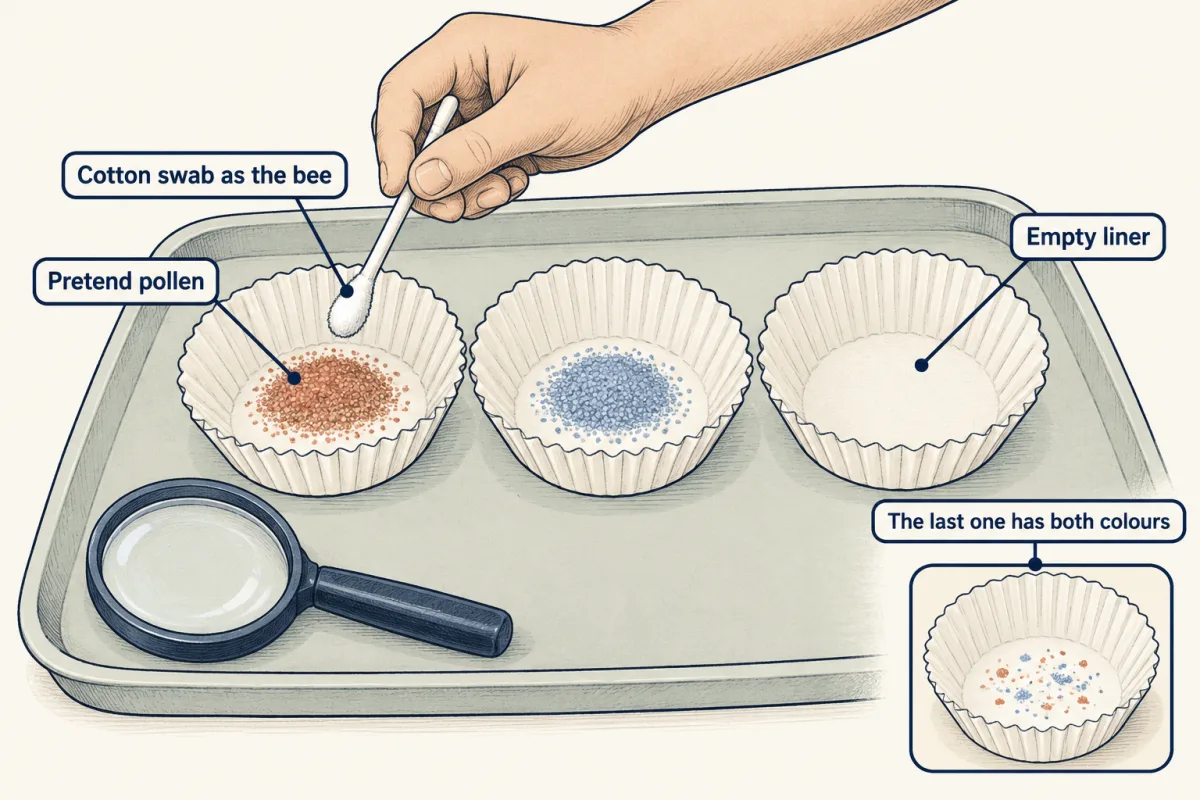
Two liners hold coloured sugar and the third is empty. Your child, the bee, dabs the swab in the first, then the second, then the third, and the last one ends up with both colours. AI-generated illustration -
Questions to ask while you do it
-
What children often think
-
Why it works
-
Easier and harder
-
If it doesn’t go as planned
-
Observation sheet
Where this lesson fits
Before thisReview first
- Plant Parts We EatThis course · Lesson 8
Your child has already sorted plant parts and learned that each part does a job, which helps with flower parts.
After thisStudy next
- From Bean to BeanThis course · Lesson 12
Your child grows a plant from seed to seed and sees the flower make the new beans.
- Seeds on the MoveThis course · Lesson 13
After seeds form from a pollinated flower, your child sees how those seeds travel to new places.
Suggested by an AI model from the lessons themselves, then checked. How we use AI