Biology Together · Skim version
What Do Earthworms Like?
Read the full lesson → Skim the whole course →
The guiding idea
Do earthworms care where they crawl? A tray with two sides lets a child ask the worms.
You and your child find a few earthworms, look closely at their bodies, and give them a choice: damp or dry, dark or light.
-
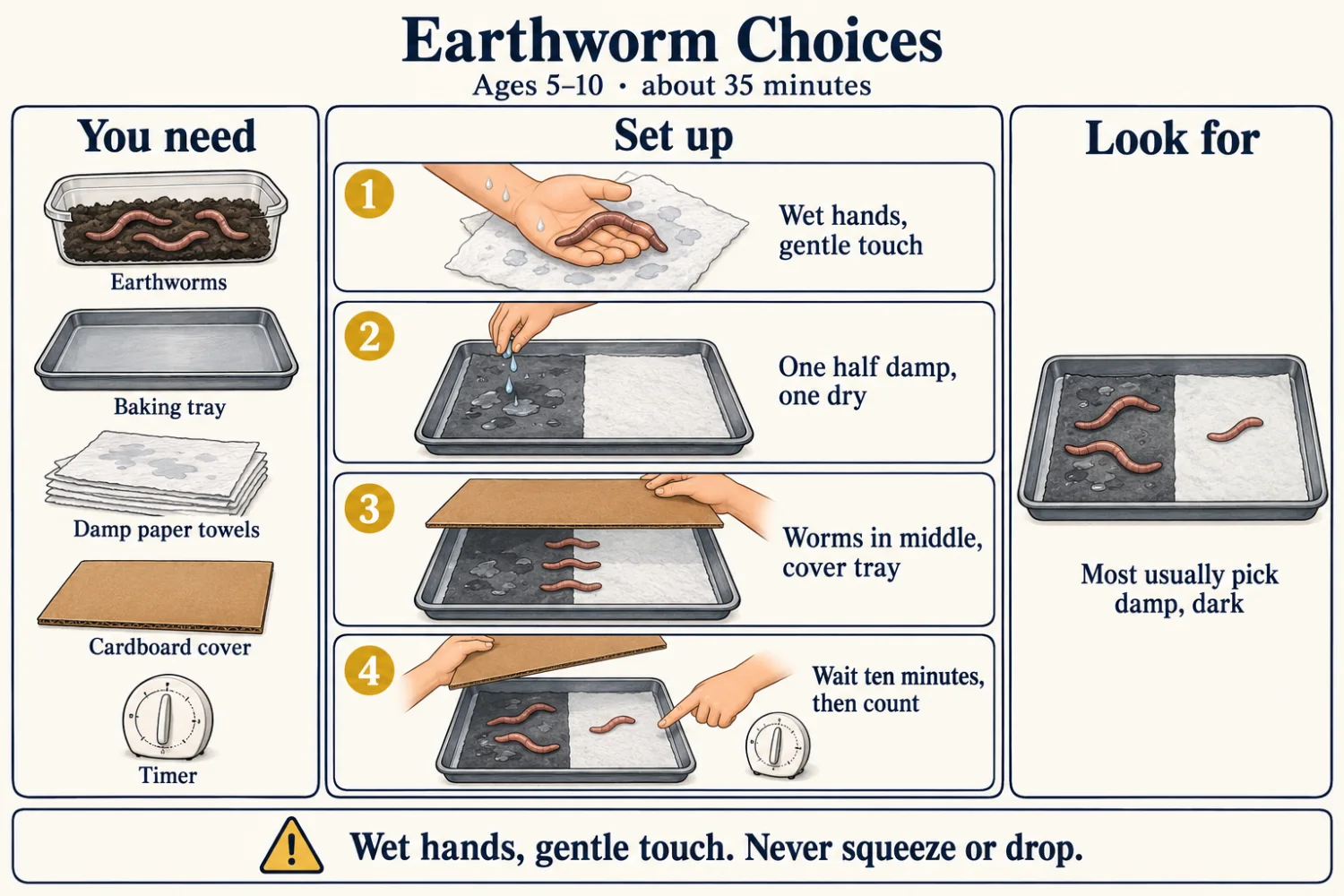
At a glance: print this card or keep it open while you work. The full steps and safety notes are below. AI-generated illustration -
The big idea
-
What to do
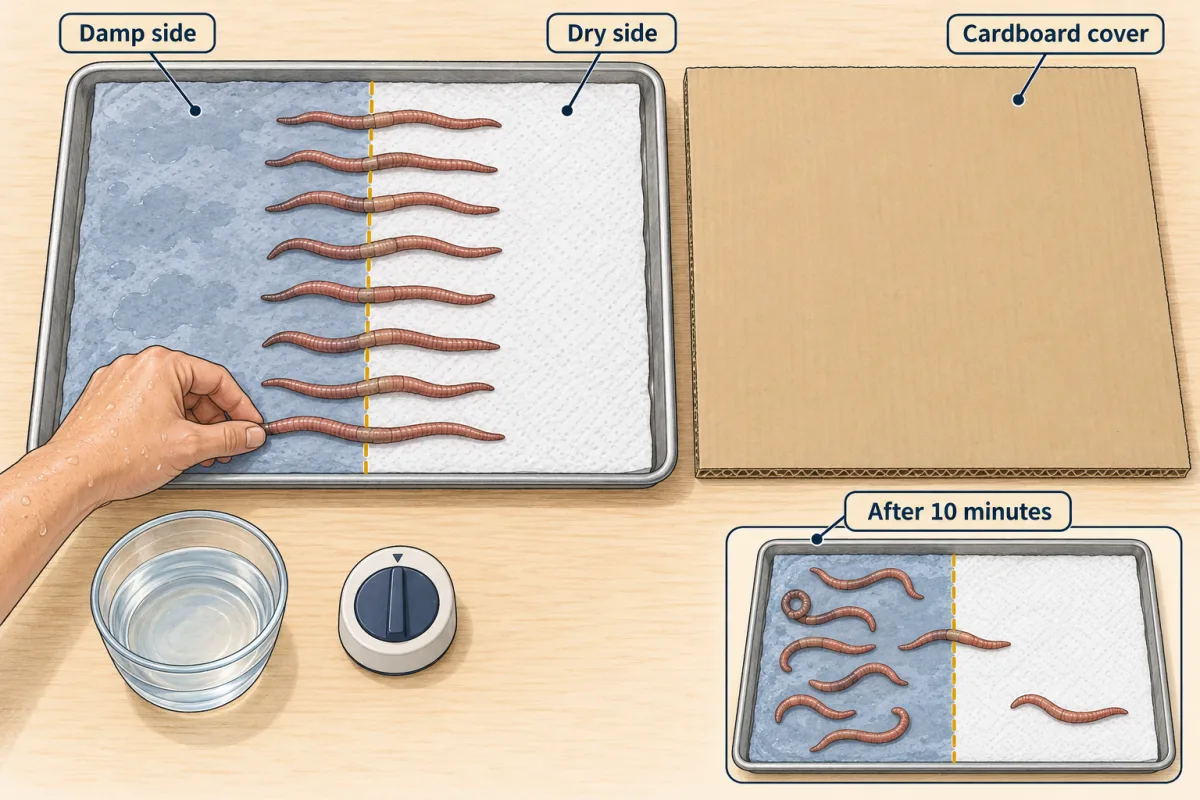
Lay the worms across the middle line, then cover the tray and wait 10 minutes. Most worms usually end up on the damp side, but not every worm. AI-generated illustration 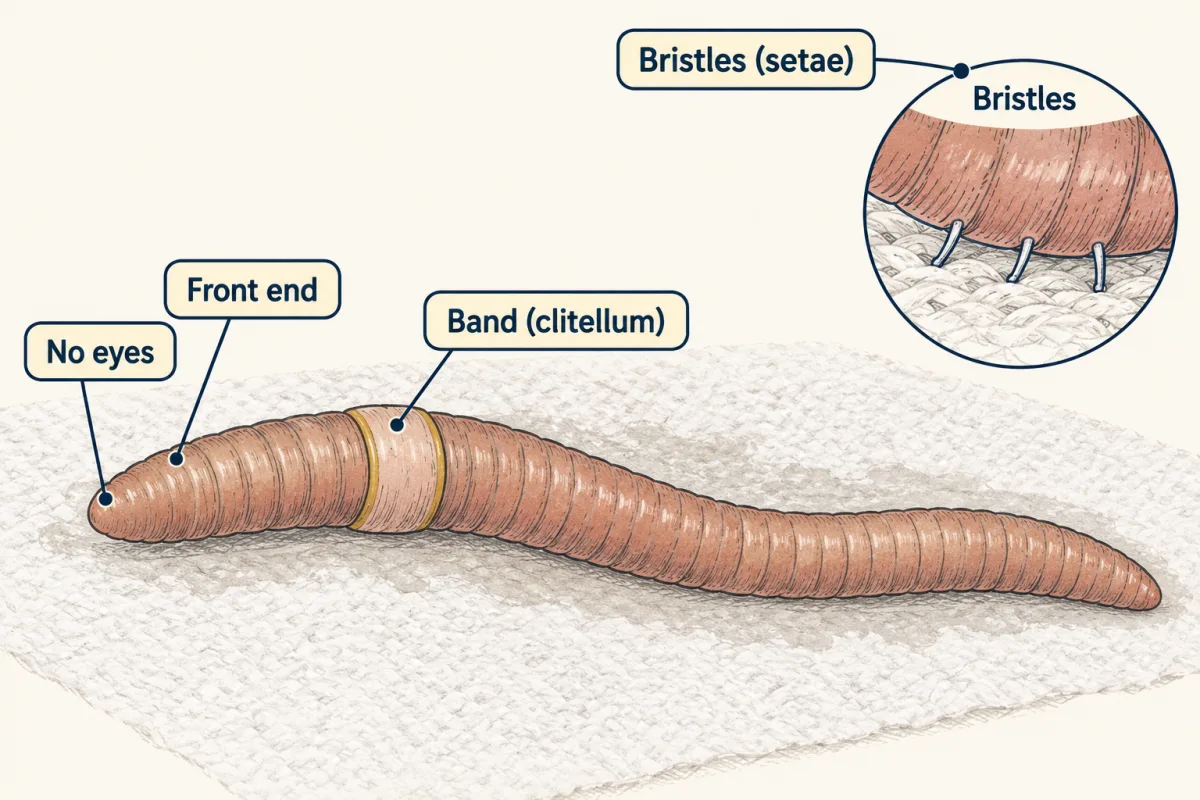
The band is closer to the front end, and young worms do not have one yet. A worm has no eyes, and its tiny bristles grip the paper as it crawls. AI-generated illustration -
Questions to ask while you do it
-
What children often think
-
Why it works
-
Easier and harder
-
If it doesn’t go as planned
-
Observation sheet
Where this lesson fits
Before thisReview first
- Alive or Not?This course · Lesson 1
Your child learns there what living things do, such as sensing and responding, which the worms show here.
Elsewhere on the siteFilms, simulations and method films in other courses
- Why a White Coat Can Help—and HurtFilm · Life Science
It shows how a living thing's body and behaviour fit the place it lives, as the worms' choices do.
Suggested by an AI model from the lessons themselves, then checked. How we use AI