Biology Together · Skim version
The Camouflage Hunt
Read the full lesson → Skim the whole course →
The guiding idea
Why are so many animals brown or green? A hungry-bird game lets a child find out which colours stay hidden.
You scatter coloured yarn "worms" on a patch of grass, and your child plays a hungry bird with 30 seconds to find them.
-
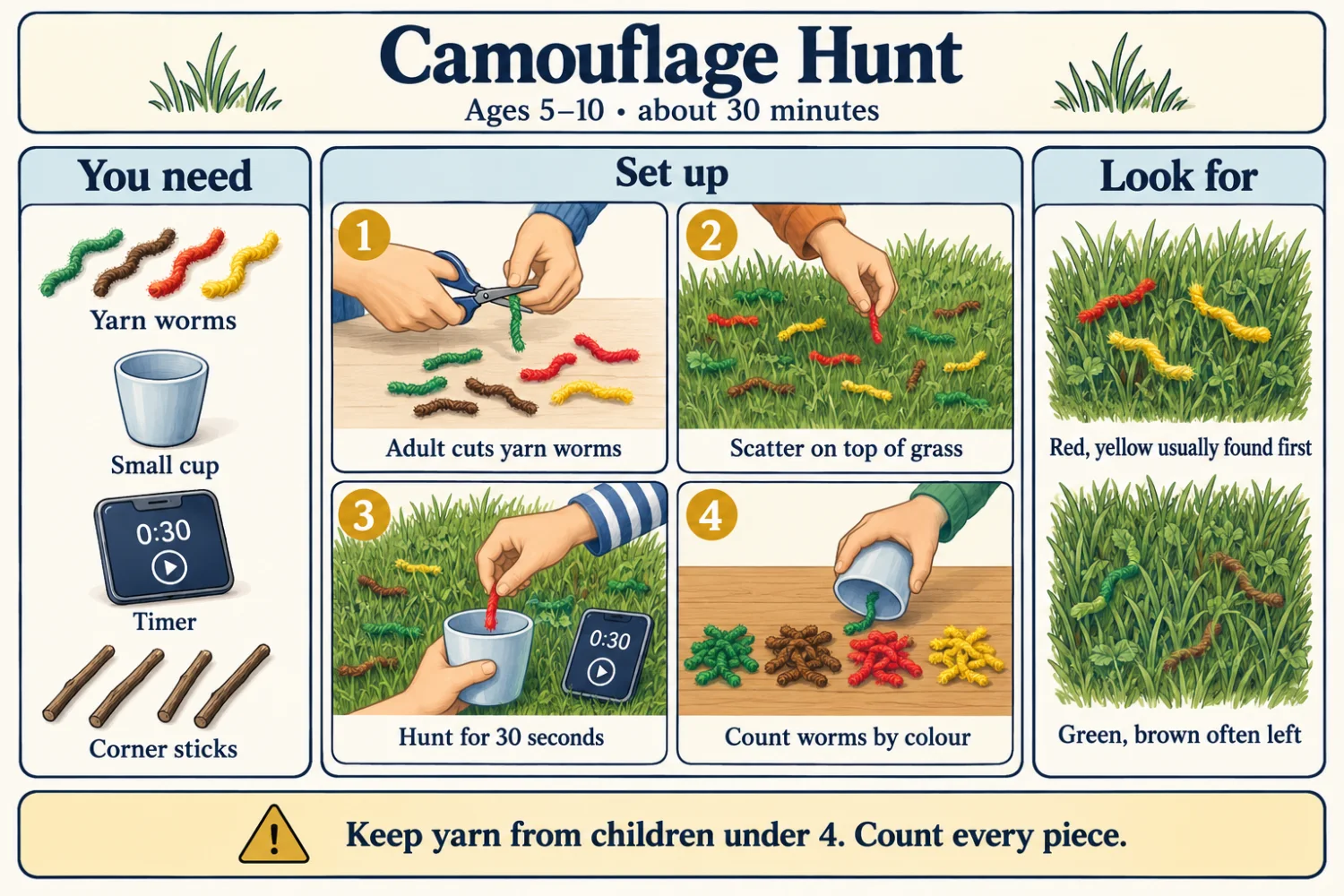
At a glance: print this card or keep it open while you work. The full steps and safety notes are below. AI-generated illustration -
The big idea
-
What to do
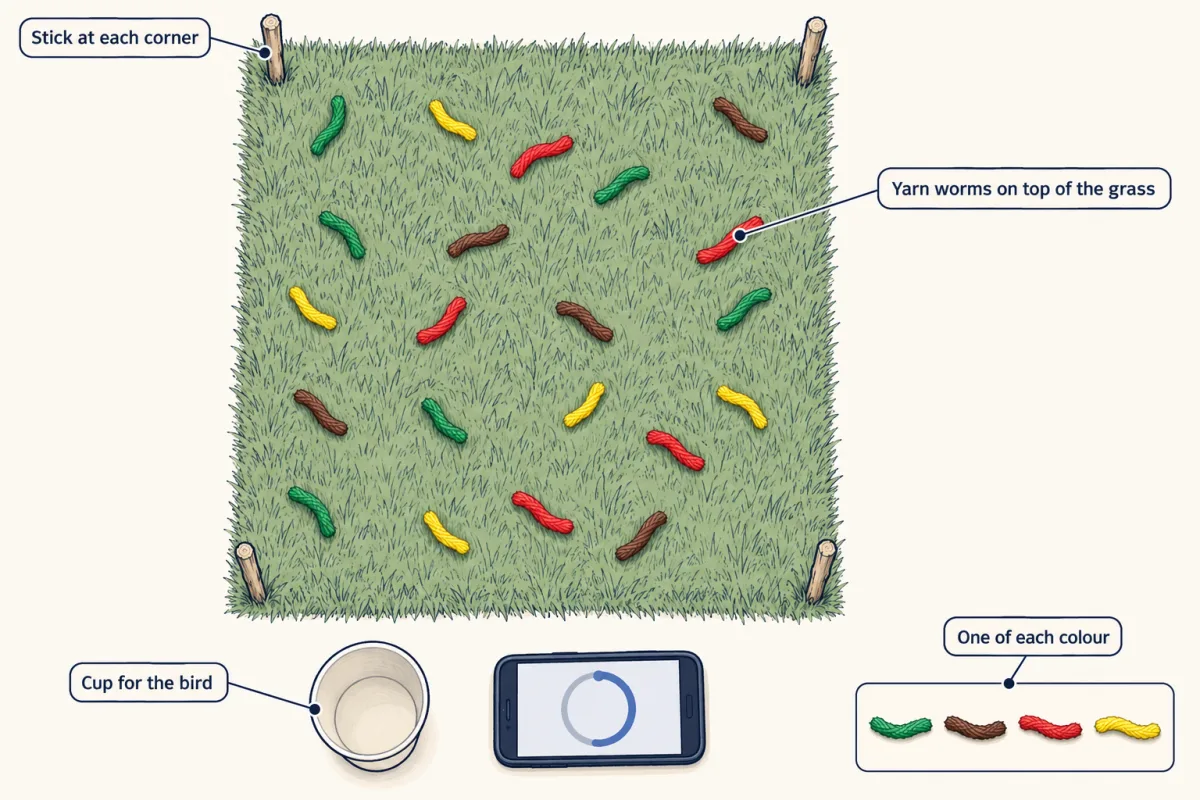
The patch is marked with a stick at each corner, and the yarn worms lie on top of the grass. Show your child one of each colour before the hunt. AI-generated illustration -
Questions to ask while you do it
-
What children often think
-
Why it works
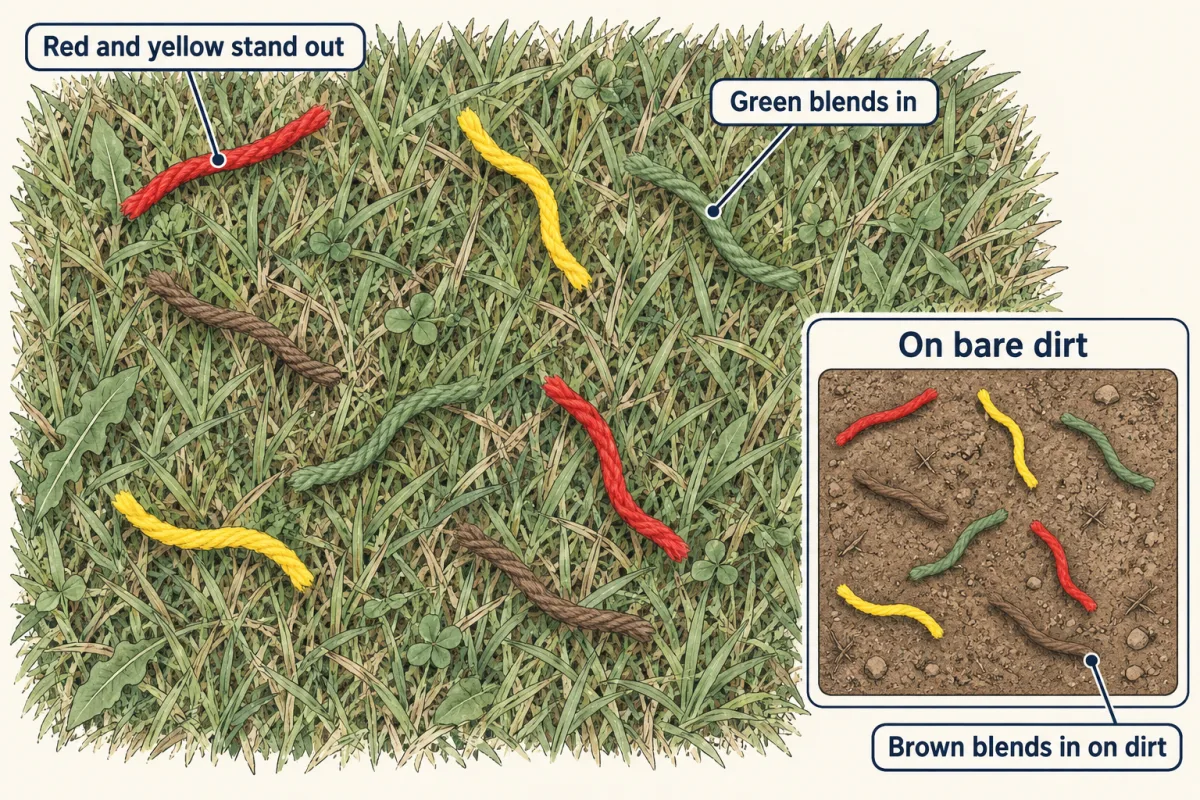
The same yarn worms on two backgrounds. On grass, the red and yellow ones usually go first and green and brown are often left; on brown dirt, brown worms often win. AI-generated illustration -
Easier and harder
-
If it doesn’t go as planned
-
Observation sheet
Where this lesson fits
Before thisReview first
- Fur, Feathers and ScalesThis course · Lesson 15
It shows that animal body coverings suit how the animal lives, which this game builds on.
After thisStudy next
- Who Eats Whom?This course · Lesson 21
It shows who eats whom, so your child sees why a hidden animal survives longer.
Elsewhere on the siteFilms, simulations and method films in other courses
- Moths and birdsSimulation · Life Science
Birds hunting moths of different colours on a background shows the same hidden-colour game on a bigger scale.
Suggested by an AI model from the lessons themselves, then checked. How we use AI