Biology Together · Skim version
Beak Buffet
Read the full lesson → Skim the whole course →
The guiding idea
Why don't all birds have the same beak? A timed kitchen-tool buffet lets a child find out.
Kitchen tools become bird beaks, and bowls around the table become a buffet of seeds, pond food, worms, fish and nectar.
-
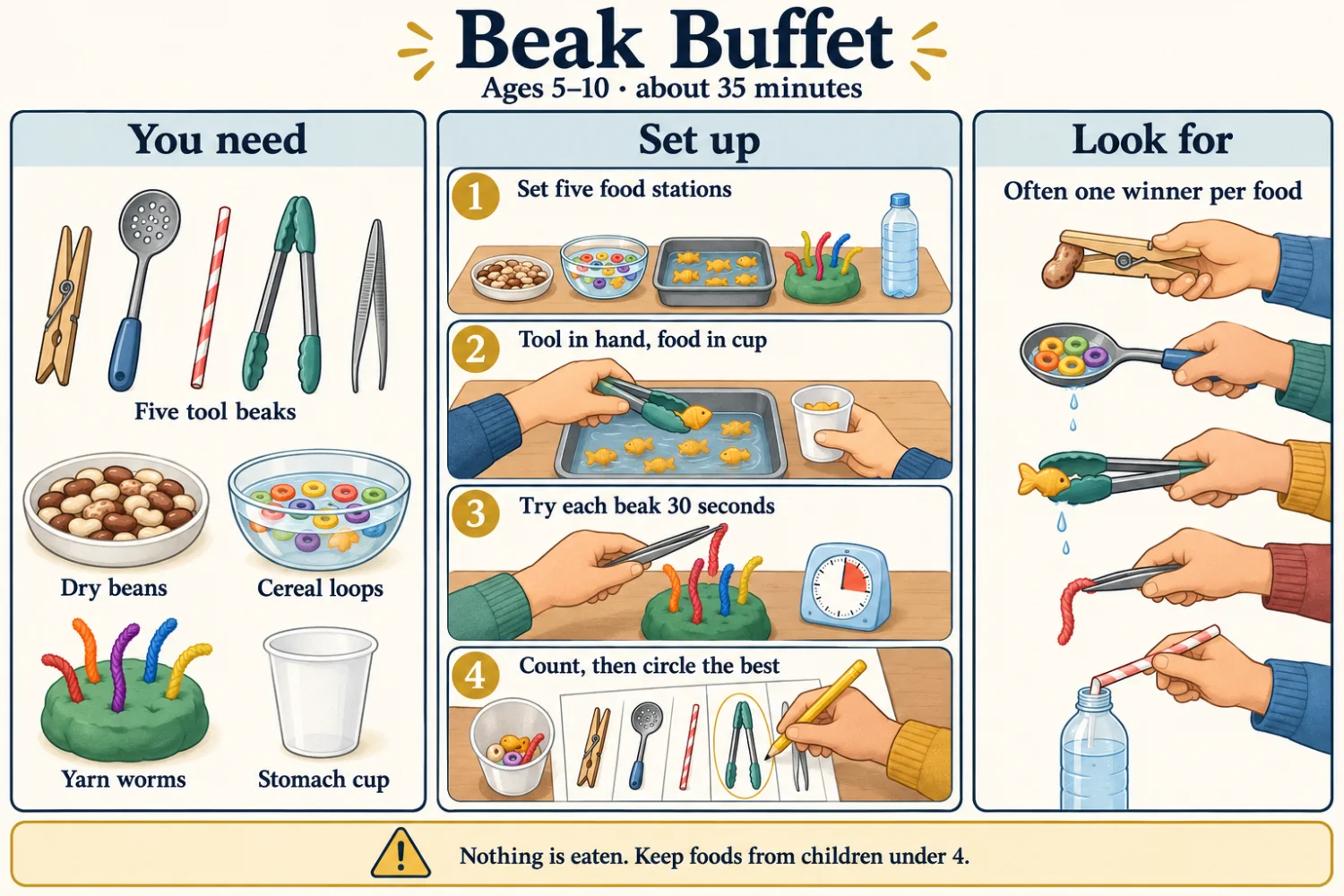
At a glance: print this card or keep it open while you work. The full steps and safety notes are below. AI-generated illustration -
The big idea
-
What to do
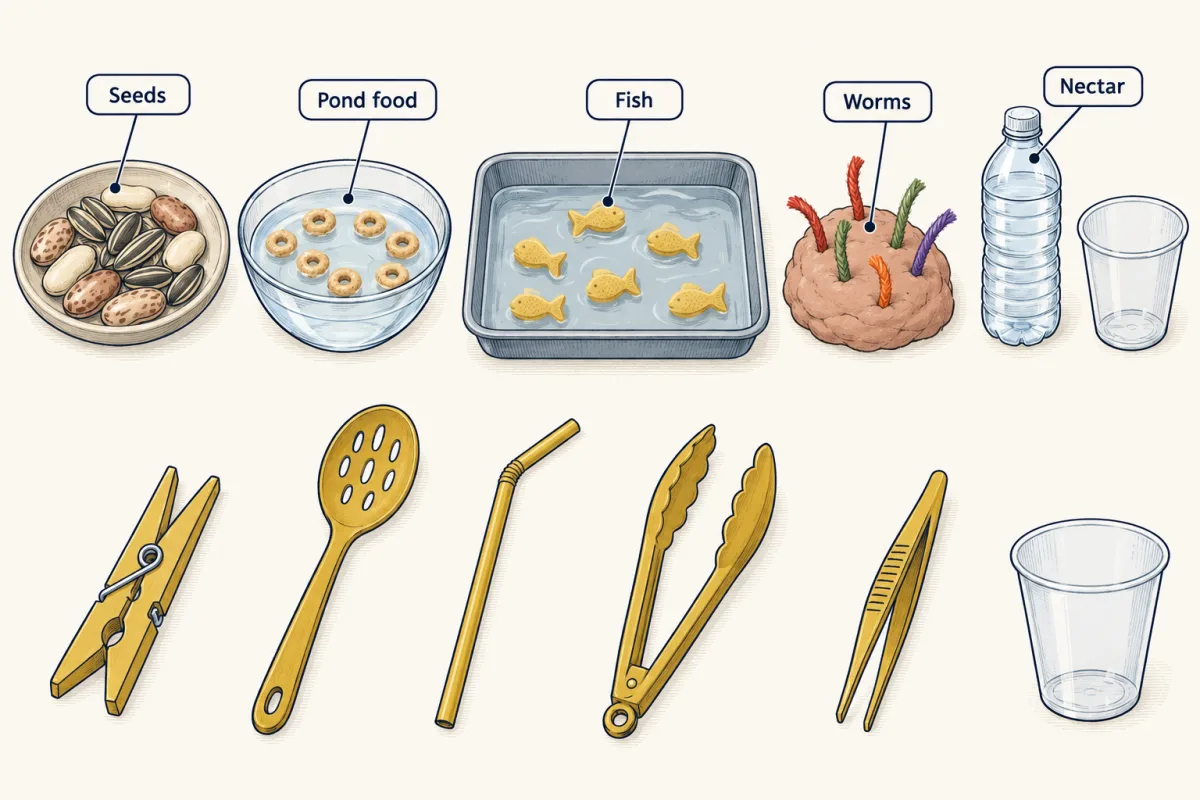
Five stations and five beaks. Put out seeds, pond food, fish, worms and nectar, and lay the five beak tools in a row. AI-generated illustration -
Questions to ask while you do it
-
What children often think
-
Why it works
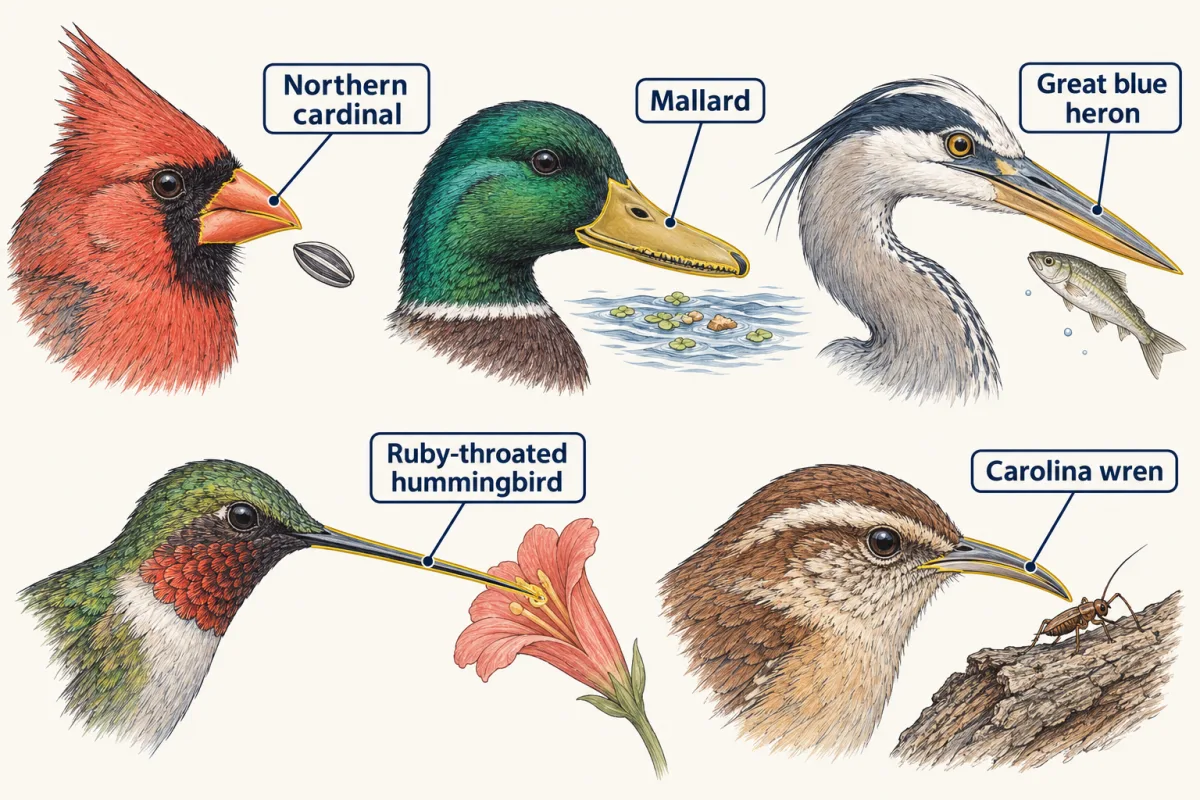
Five real bills and what they are for. A cardinal cracks seeds, a mallard strains food from water, a heron grabs fish, a hummingbird reaches for nectar, and a wren picks insects off leaves and bark. AI-generated illustration -
Easier and harder
-
If it doesn’t go as planned
-
Observation sheet
Where this lesson fits
Before thisReview first
- Fur, Feathers and ScalesThis course · Lesson 15
Your child has already felt how a bird's feathers suit its life, so beaks are the next body part to compare.
After thisStudy next
- The Camouflage HuntThis course · Lesson 18
Your child sees another body feature that helps an animal survive, this time colour that hides it from hungry birds.
- The Blubber GloveThis course · Lesson 17
It gives your child another body feature that fits an animal's way of life, this time staying warm in cold water.
Elsewhere on the siteFilms, simulations and method films in other courses
- Why a White Coat Can Help—and HurtFilm · Life Science
It shows how a body feature that helps an animal survive in its home is called an adaptation.
- Share a tree with five kinds of birdsSimulation · Life Science
Birds with different beaks share one tree by eating different foods, which extends the buffet idea.
Suggested by an AI model from the lessons themselves, then checked. How we use AI