Biology Together · Skim version
Adopt a Tree
Read the full lesson → Skim the whole course →
The guiding idea
Does a bare tree die in winter? One tree, visited every month for a year, answers the question.
You and your child choose one tree near home or school and visit it about once a month for a year, taking a photo from the same spot and drawing what you see.
-
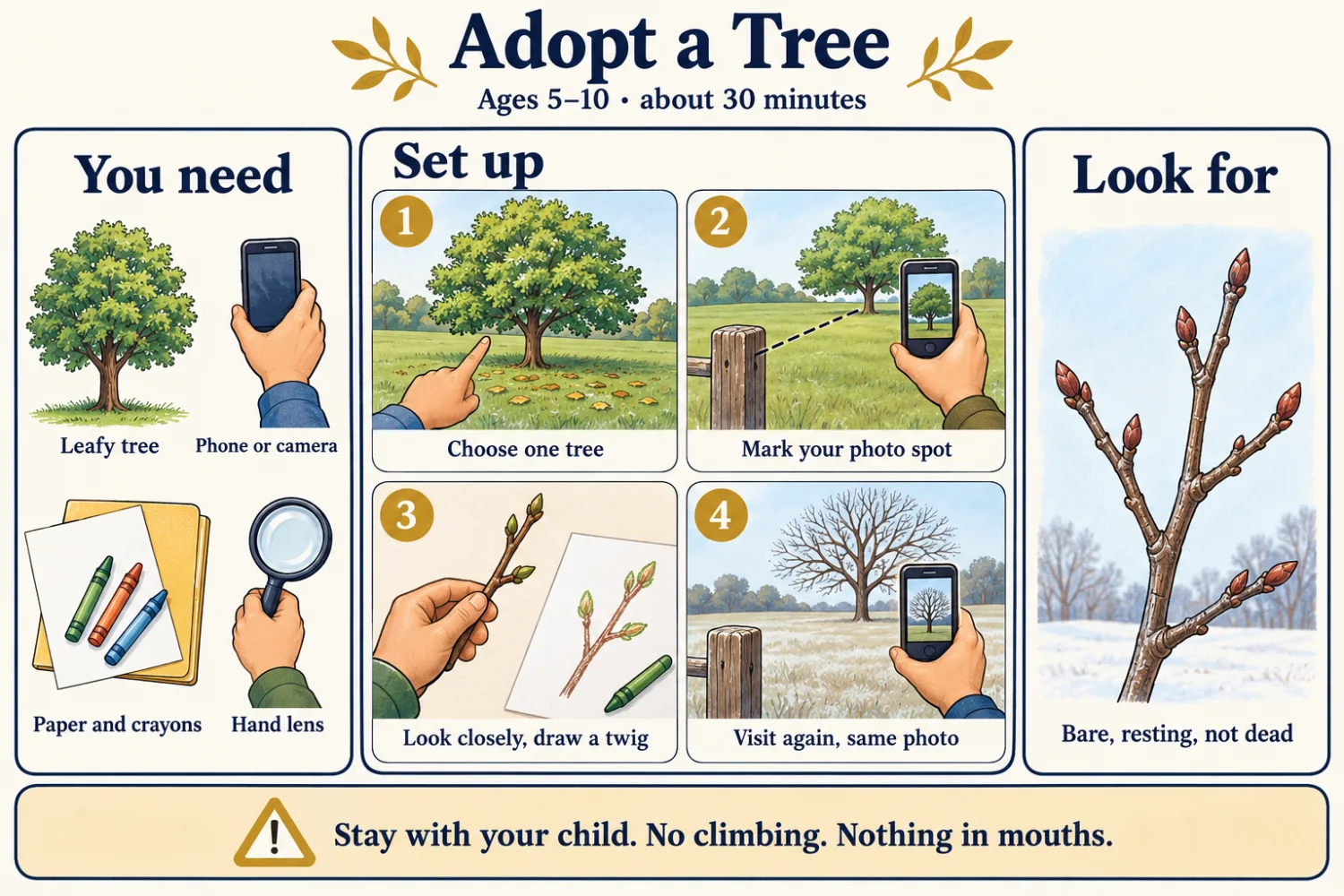
At a glance: print this card or keep it open while you work. The full steps and safety notes are below. AI-generated illustration -
The big idea
-
What to do
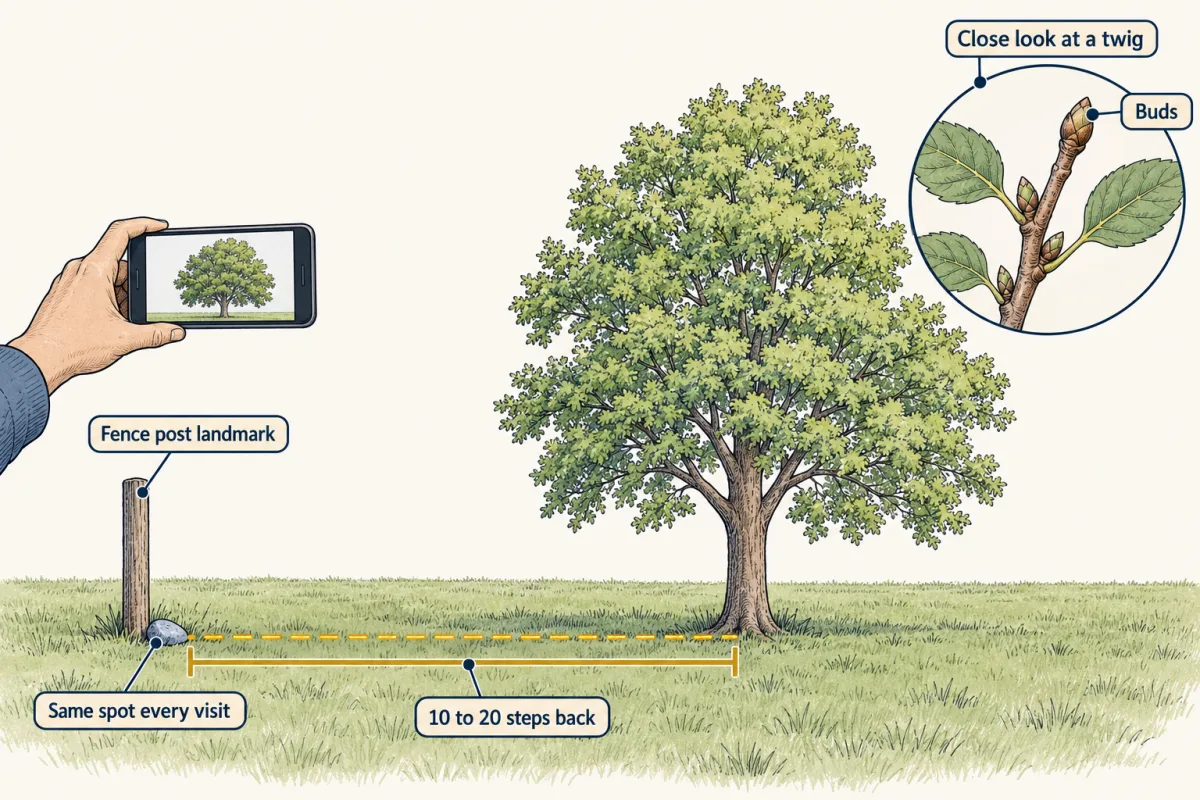
Take every photo from the same spot, 10 to 20 steps back, facing the same way. Up close, look for the buds at the tip of a twig and where each leaf joins it. AI-generated illustration 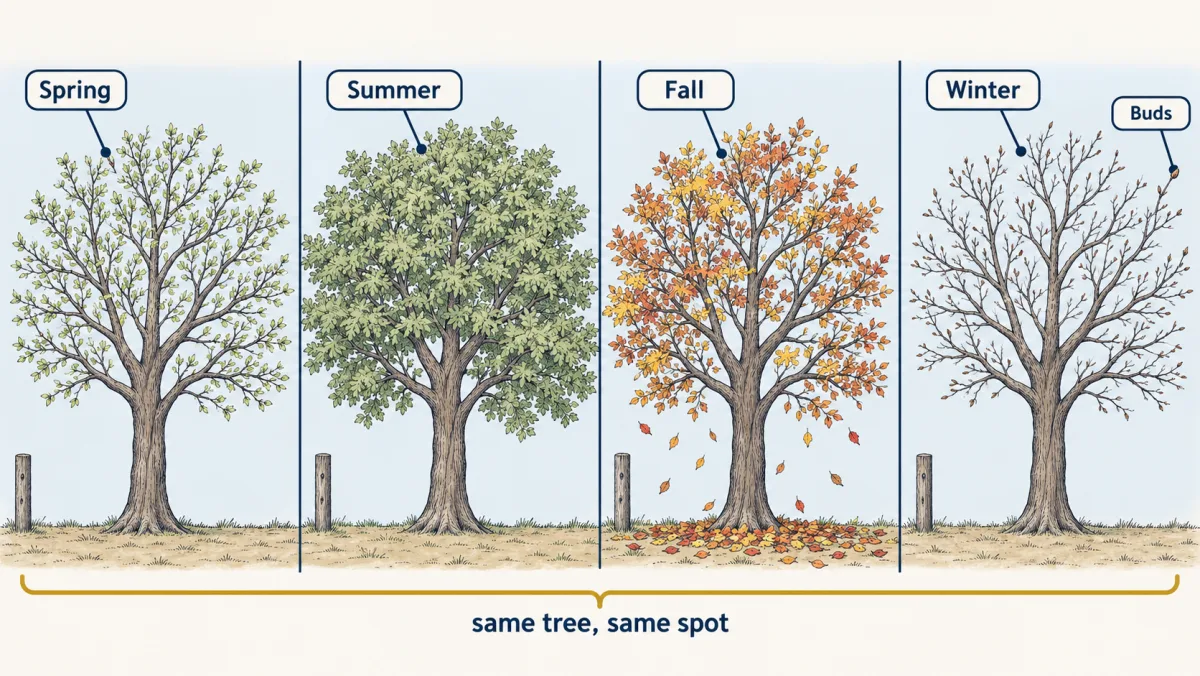
The same tree through the year: opening buds in spring, full leaves in summer, color and falling leaves in fall, and bare branches with buds in winter. Dates vary by tree and by year. AI-generated illustration -
Questions to ask while you do it
-
What children often think
-
Why it works
-
Easier and harder
-
If it doesn’t go as planned
-
Observation sheet
Where this lesson fits
After thisStudy next
- Sleep, Travel or Stay?This course · Lesson 26
Your child sees how animals cope with winter, after learning that the tree rests instead of dying.
Suggested by an AI model from the lessons themselves, then checked. How we use AI